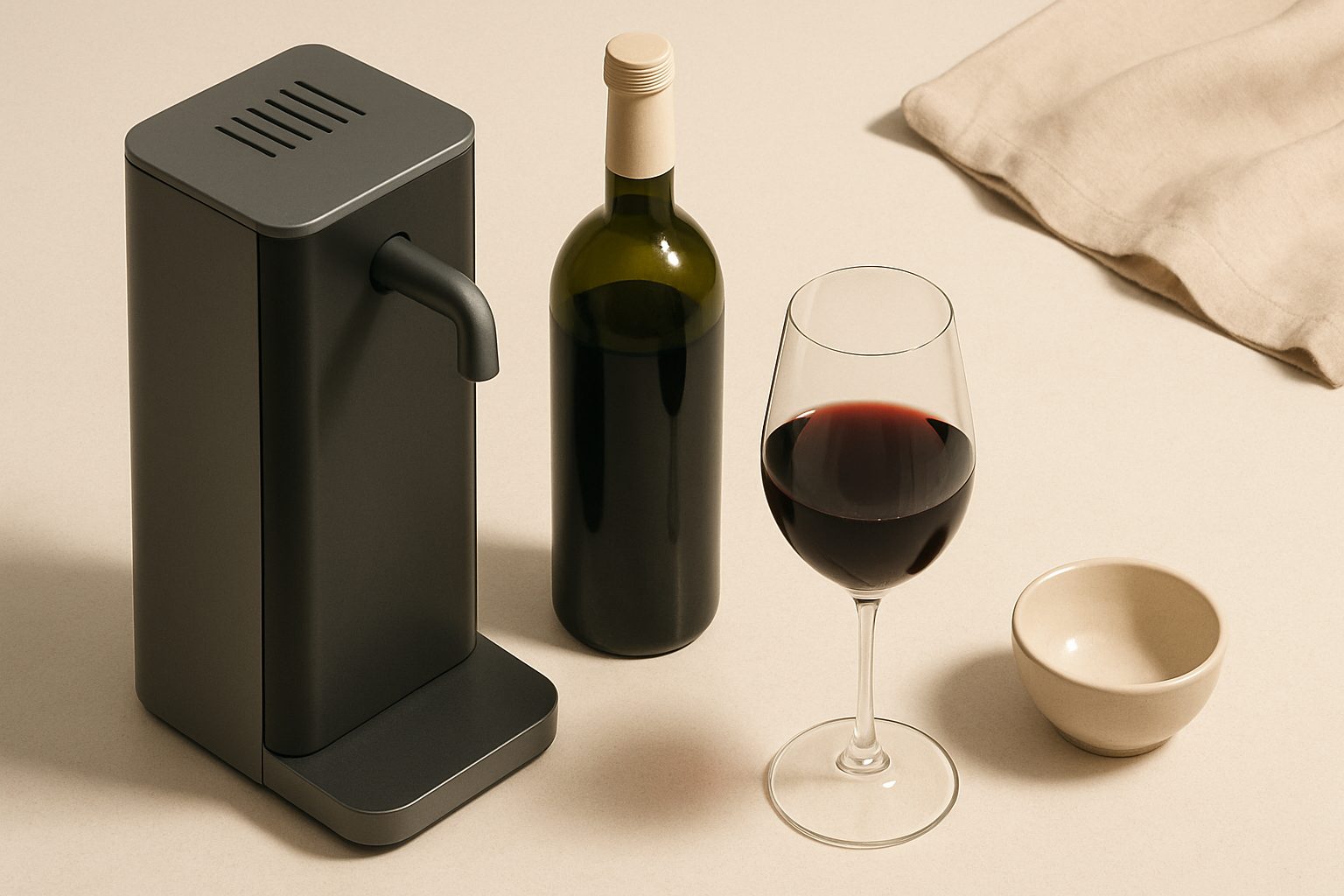
Best Premium Wine Dispensers UK (£100+): Luxury Picks Worth the Splurge
Wine dispensers have moved beyond novelty gadgetry into genuinely practical territory for serious drinkers. A decent premium model keeps an open bottle fresh for weeks, maintains perfect serving temperature, and looks polished enough to leave on your kitchen counter or dining room sideboard. At £100 and up, you're paying for reliable cooling, build quality, and features that actually work rather than gimmicks.
Why Spend Premium Money on a Wine Dispenser?
Below £100, wine dispensers mostly rely on passive cooling or cheap thermoelectric units that struggle in a warm kitchen and make a racket doing it. Premium models jump to proper compressor cooling—the same technology in your fridge—which holds temperature accurately and runs quietly.
The real value proposition: an open bottle stays drinkable for 3–4 weeks instead of 3–4 days. That changes how you buy wine. Instead of finishing a bottle because it's open, you can pour one large glass in the evening without waste guilt. For households where two people drink differently (one prefers red, one prefers white), dual-zone models eliminate the temperature-juggling problem entirely.
Premium models also tend toward heavier construction, better seals, and thermostat stability within 1–2°C rather than the ±5°C drift of budget units. That precision matters when you're serving 15-year-old Burgundy at exactly 16°C, not guessing between "cold" and "quite cold."
Key Features Worth Paying For
Compressor cooling is non-negotiable at this price point. It's reliable, quiet (under 35dB from a distance), and doesn't require special coil maintenance. Thermoelectric cooling is cheaper but louder and worse at temperature control.
Dual-zone compartments let you store red and white at their ideal temperatures simultaneously. A single-zone unit forces compromise. If you regularly drink both, the extra 30–40% cost is money well spent rather than an indulgence.
Stainless-steel finish isn't just aesthetic; it resists fingerprints, cleans easily, and doesn't look dated in three years like black plastic-fronted units do. It also indicates generally better internal construction—brands that invest in exterior materials usually don't skimp on internals.
Temperature display and controls should be intuitive. Digital touchscreens look modern but are fiddly with wet hands; physical rotary knobs or simple button controls age better and rarely break. A precise digital readout (not just "cool" and "cooler") helps you dial in exact serving temperatures.
Noise level matters more than you'd think if the unit sits near your kitchen or dining area. Compressor models run 30–40dB; budget thermoelectric units can hit 45dB+, which is genuinely annoying in a quiet room.
What to Actually Expect
Premium wine dispensers are not small appliances. Most single-zone units occupy roughly the footprint of a small microwave; dual-zone models are bigger. Measure your intended space beforehand—under-counter installation is possible with some models, but not all.
Capacity ranges from 2–6 bottles depending on size and layout. Dual-zone models typically hold fewer total bottles because cooling compartments are narrower. Check the actual shelf configuration—some units stack bottles awkwardly, wasting space.
Energy consumption runs 80–150 watts for a decent compressor unit, depending on ambient temperature and how often you open it. That's roughly 20–40p per month in electricity at current rates. Budget thermoelectric models use less power but often run their compressor harder trying to maintain temperature, cancelling the saving.
Many premium units include a wine preservation system that injects inert gas (nitrogen or argon) to displace oxygen in the bottle. This genuinely extends freshness beyond simple cooling alone, though you'll need to buy replacement canisters at £8–15 each.
Gift Angle: Who Should Actually Buy One?
Premium wine dispensers work best as gifts for wine enthusiasts with both space and drinking variety. Someone who buys a mixed case, drinks slowly, or entertains regularly sees genuine value. A couple where one drinks red and one white? Perfect fit for dual-zone.
They're poor gifts for flat dwellers with limited counter space, or for someone whose wine consumption is two bottles monthly (room-temperature storage does fine). A wine fridge, technically different, is better if someone's building a proper collection and needs to age bottles.
As home entertainment centre pieces, they're excellent—more sophisticated than a drinks trolley, more functional than a wine rack, and genuinely useful rather than decorative.
The Honest Tradeoffs
Premium models cost real money (£150–400+ for dual-zone), require electrical power at the right spot, and don't actually improve wine flavour—they preserve it. You're buying convenience and preventing waste, not transformation.
They're also not silent. Even quiet compressor models produce a subtle hum every few minutes. If your kitchen is dead silent, you'll notice it; in a normal environment, it fades into background noise.
Cleaning can be fussy depending on design. Some have accessible drip trays; others require reaching inside awkward compartments. Check reviews for real user experience, not just specs.
Final Word
At £100+, premium wine dispensers aren't impulse purchases, but they're not luxury indulgences either. They're pragmatic tools for people who drink wine regularly across different styles and hate waste. The cooling is genuinely better than budget alternatives, the build quality lasts, and the stainless-steel finish ages well. If that describes your household, the premium spend isn't splurge—it's sense.
More options
- Electric Home Wine Dispensers (Amazon UK)
- Wine Preservation Systems (Argon / Vacuum) (Amazon UK)
- Countertop Wine Cooler Dispensers (Amazon UK)
- Box Wine Dispensers & Bag-in-Box Taps (Amazon UK)
- Wine Dispenser Gift Sets (Amazon UK)